Active 18-month research and development programme.
02 / Connect · ESA-supported TRL 3→4 R&D
Extending direct-to-device connectivity beyond terrestrial coverage.
BeamGrid® is advancing handset-integrated antenna and RF technology for direct-to-device satellite connectivity through an ESA-supported 18-month research and development programme targeting progression from TRL 3 to TRL 4.
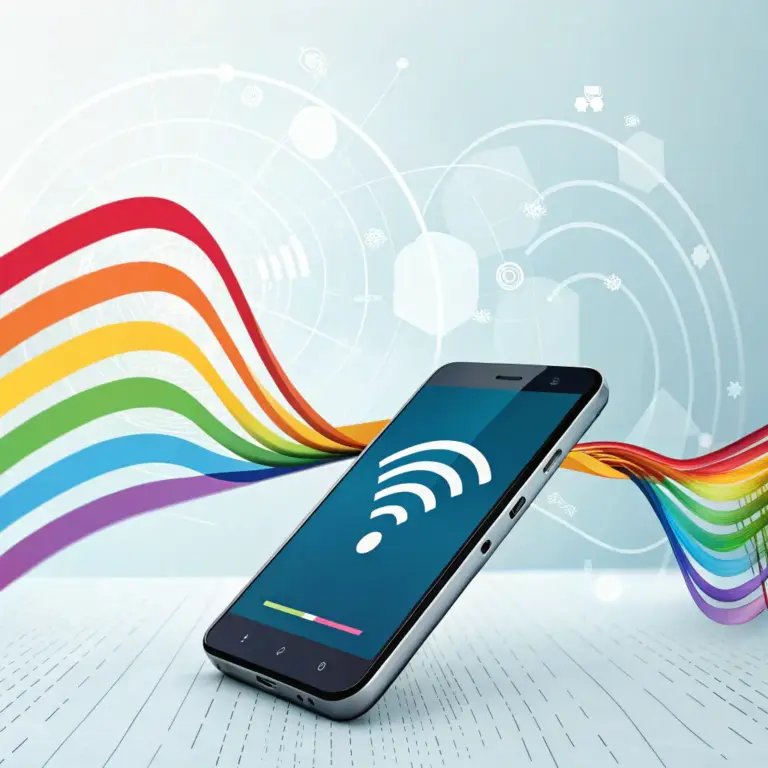
Direct-to-device capability aligned with emerging satellite-to-handset requirements.
Validate radiated performance, user safety, coexistence and over-the-air behaviour.
The handset integration challenge
The handset remains one of the hardest parts of the link.
Direct-to-device satellite services promise connectivity beyond terrestrial coverage, but the RF capability must operate within limited space, power, user-safety, coexistence and real-world handling constraints. BeamGrid® is developing the evidence needed to assess credible progress toward device integration.
Device-ready engineering
Develop capability for a realistic handset environment and representative platform constraints.
Multi-constraint validation
Assess radiated performance, user interaction, power, safety and coexistence together.
Partner integration
Align requirements and evidence with device, network and independent measurement partners.
Technology maturity
A gated pathway from requirements to measured TRL 4 evidence.
Progress is assessed against predefined acceptance criteria rather than isolated simulation claims. This remains an active R&D programme; commercial deployment has not been claimed.
Requirements baseline
- Target use cases and system requirements defined
- Representative device constraints established
- Measurable acceptance criteria framed
Representative implementation
- Electromagnetic modelling and prototype development
- Performance and integration engineering
- Measurement planning and partner interfaces
Measured handset evidence
- Measured radiated performance
- User interaction, safety and coexistence assessment
- Repeatability, over-the-air and partner validation
Target outcomes
Engineering capability for the places where terrestrial coverage ends.
Remote and underserved regions
Support future satellite direct-to-device services for users beyond reliable terrestrial coverage.
Communications beyond damaged infrastructure
Advance research toward emergency connectivity when terrestrial networks are unavailable.
Mobile and IoT use outside dense networks
Support future devices operating across terrestrial and non-terrestrial coverage.
Public evidence · Protected implementation
Purpose, maturity and validation are public. The architecture is not.
Handset, satellite and independent measurement partners welcomed
Detailed topology, design data and results remain confidential
Qualified technical diligence is available under NDA
NTN direct-to-device collaboration
Discuss the programme confidentially.
Qualified organisations can discuss device integration, measurement, system trials, validation or research collaboration under appropriate confidentiality arrangements.